Cellverse AI
Duration
May 2023-Aug 2025
Location
Shanghai
Task
AI Adoption
Saas Dashboard
System UX
AI-Powered Life Science Research Platform — modern, efficient, and trustful
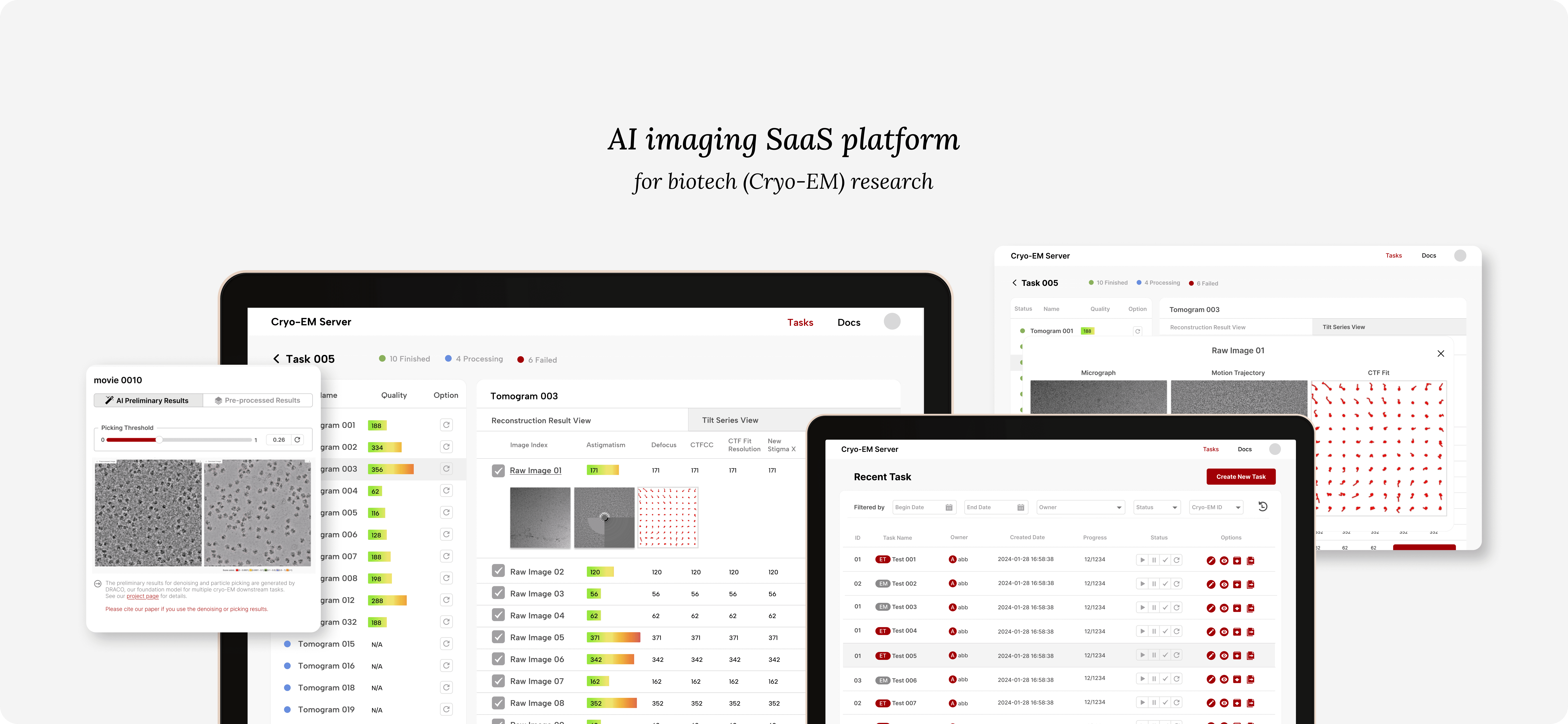
Cellverse AI is a professional B2B SaaS platform designed for scientists working with complex biological data. The goal was to create an intelligent research environment that streamlines data interpretation and documentation while keeping workflows structured and collaborative. By integrating AI-powered image recognition with a unified digital lab notebook, the platform removes manual bottlenecks and synchronizes research seamlessly across web, tablet, and mobile.
Impact & value
Streamlined research workflows for 500+ biologists, enabling 2M+ image processing runs with 60% fewer manual steps.
We broke away from traditional grids and embraced an expressive, editorial feel. The color palette is bold and varied — celebrating visual experimentation — while typography is oversized, playful, and layered. Each section of the site introduces a new visual rhythm, echoing the diversity of creative work.
Highlights:
– Supporting 2M+ image runs
– 60% fewer manual steps
– Securing multi-million-dollar funding from MiraclePlus
PROBLEM SPACE
Fragmented data and rigid, non-scalable workflows increase learning costs, reduce efficiency, and block the integration of new AI capabilities.
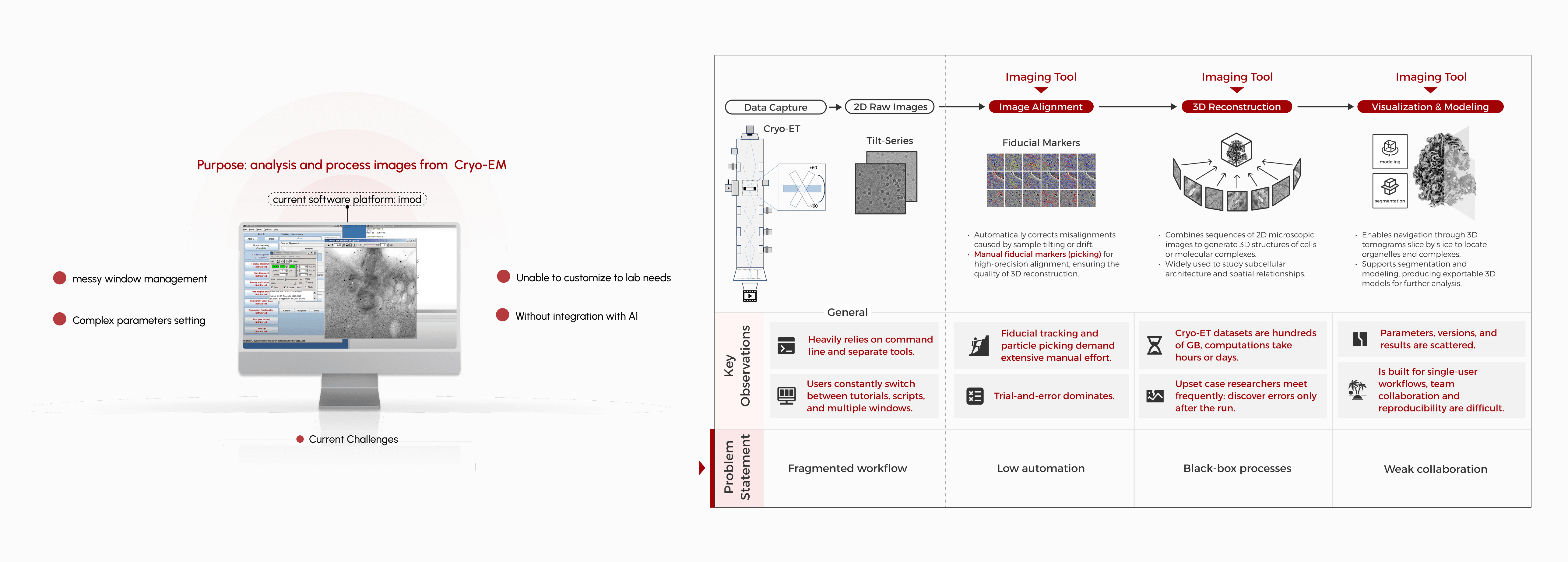
Almost all Cryo-ET labs worldwide rely on IMOD for image processing. However, IMOD has a notoriously steep learning curve and buries critical features deep within its interface—making onboarding slow and daily workflows inefficient.
DESIGN PROCESS
User Flow Reconstruction
Explore Multi-User Collaborative Workflow
I restructured the traditional experiment journey into a digital loop: Capture → Cloud Sync → AI Analysis → Collaboration.
The Solution: Designed a cross-platform ecosystem where the Tablet acts as the "Capture Station" in the wet lab, while the Web Dashboard serves as the "Deep Analysis Hub" in the office.

Human-AI Alignment
Comparison View for AI-powered Feature
Trust is critical in science. Users won't trust "Black Box" AI.
Ideation: Created a "White Box" UI for AI analysis. Instead of just showing a final number, I designed a multi-layer canvas where researchers can toggle AI heatmaps, adjust sensitivity thresholds, and manually override AI annotations to ensure 100% data integrity.

User Permission Management
Multi-User Collaborative Manage System
B2B platforms often suffer from "Dashboard Fatigue."
Ideation: Implemented a hierarchical Information Architecture (IA). Used a "Progressive Disclosure" technique—showing high-level experiment trends on the main dashboard, while allowing "one-click drill-down" into raw high-resolution microscopic images.

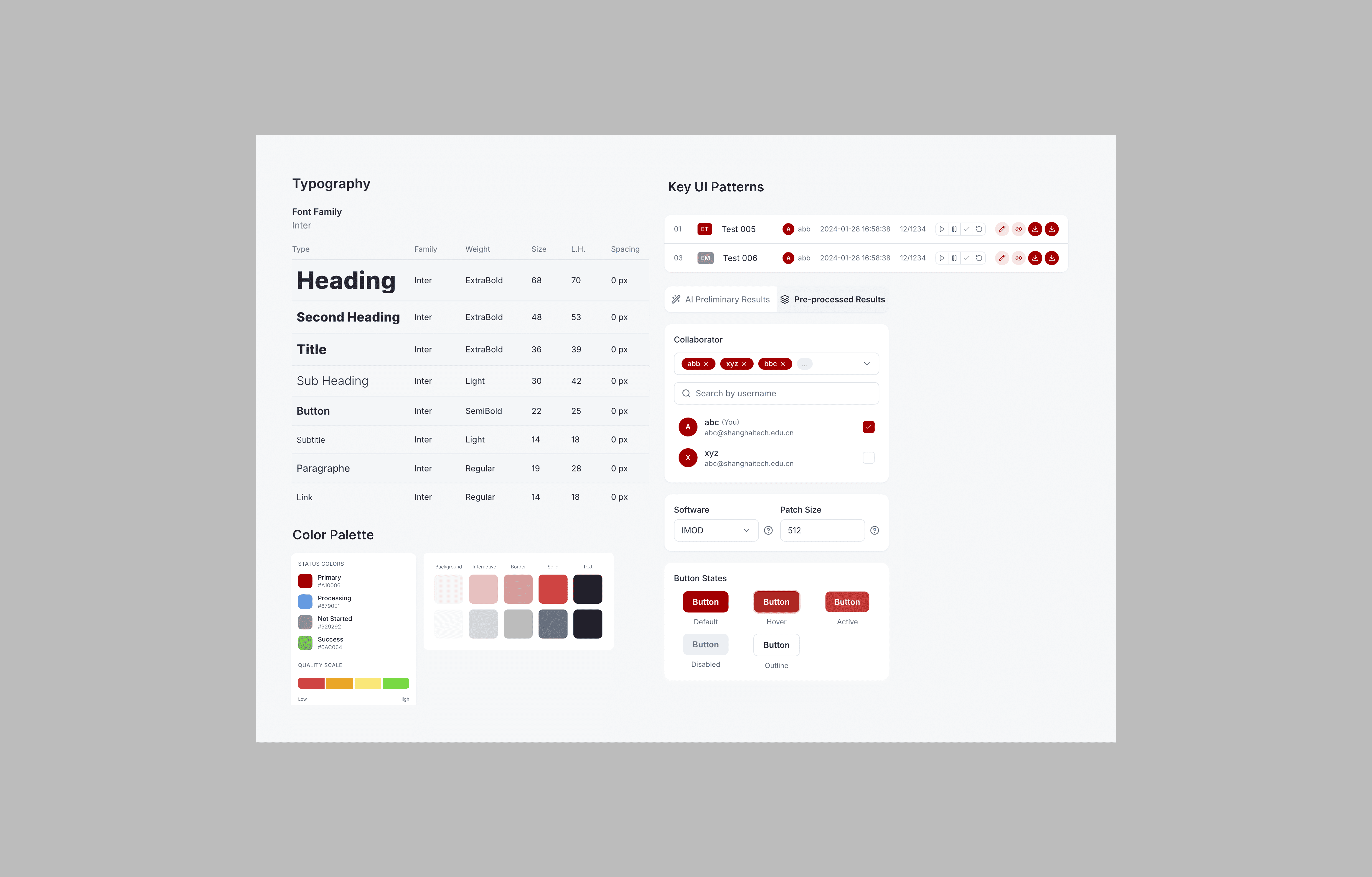
REFLECTION
Reflection 1
Making AI transparent enough for scientists to trust—and powerful enough to transform their work.
By designing a "White Box" approach to AI interaction, I enabled researchers to maintain full control and data integrity while dramatically reducing manual overhead—proving that trust and efficiency can coexist in scientific workflows.